Beta-Carotene: How This Plant Pigment Helps You Tan Better
If you have ever wondered why carrots, sweet potatoes and mangoes keep appearing in every “foods for a better tan” article, the answer is one nutrient: beta-carotene. This plant pigment is one of the most studied compounds in the conversation about skin, sun and natural color. It is also the active ingredient that turns most tanning supplements into something more than candy. Here is a clear, no-hype look at what beta-carotene actually does for your skin, how to use it well, and how it fits into a smart summer routine.
What beta-carotene actually is
Beta-carotene belongs to a family of pigments called carotenoids, which give yellow, orange and red fruits and vegetables their characteristic color. In the body it plays two complementary roles. First, it is a precursor of vitamin A: when the body needs vitamin A for vision, immunity or cell renewal, it converts beta-carotene as required, which avoids the toxicity risk of taking pre-formed vitamin A directly. Second, and most relevant to tanning, it is a powerful antioxidant that accumulates in fatty tissues just under the skin. Over time, that accumulation gives the skin a warmer, slightly golden undertone, even before any sun exposure.
How beta-carotene supports a healthier tan
Tanning is the skin’s protective reaction to UV radiation: specialized cells called melanocytes produce melanin, the dark pigment that absorbs UV and shields deeper tissues. Beta-carotene does not replace melanin, but it works alongside it in three ways. It neutralizes part of the free radicals generated by sun exposure, reducing the oxidative stress that ages the skin and forces it to shed prematurely. It deposits a yellow-orange undertone in the subcutaneous fat layer, which combines with melanin to create a deeper, more uniform color. And it supports the integrity of the skin barrier, which means the skin retains moisture better and holds pigment longer. The result is a tan that looks more natural, fades more slowly, and feels less dehydrated.
Foods richest in beta-carotene
You can absolutely build your beta-carotene intake from the kitchen. The deepest sources are carrots, sweet potatoes, butternut squash and pumpkin, followed by mango, papaya, apricots, red pepper, and dark leafy greens such as spinach, kale and watercress (yes, even green leaves are rich in beta-carotene, masked by chlorophyll). A useful rule: the more saturated the color, the higher the concentration. One important detail is that beta-carotene is fat-soluble, which means it is much better absorbed when eaten with a source of fat. Drizzle olive oil on roasted carrots, add avocado to a spinach salad, or eat mango with a handful of nuts. Without fat, you absorb a small fraction of what your plate contains.
How long it takes to see results
Beta-carotene is not a same-day cosmetic. It needs time to accumulate. Most studies on dietary carotenoids show measurable changes in skin tone after four to six weeks of consistent intake, with a peak effect around twelve weeks. That is why nutritionists and dermatologists recommend starting “tan prep” three to four weeks before your first real sun exposure, ideally earlier. The good news is that the effect is cumulative and reversible. Stop the intake and the color fades over a few weeks. Keep it up and the undertone stays. Treat it like fitness for the skin, not like a one-night fix.
Why supplements help, even when you eat well
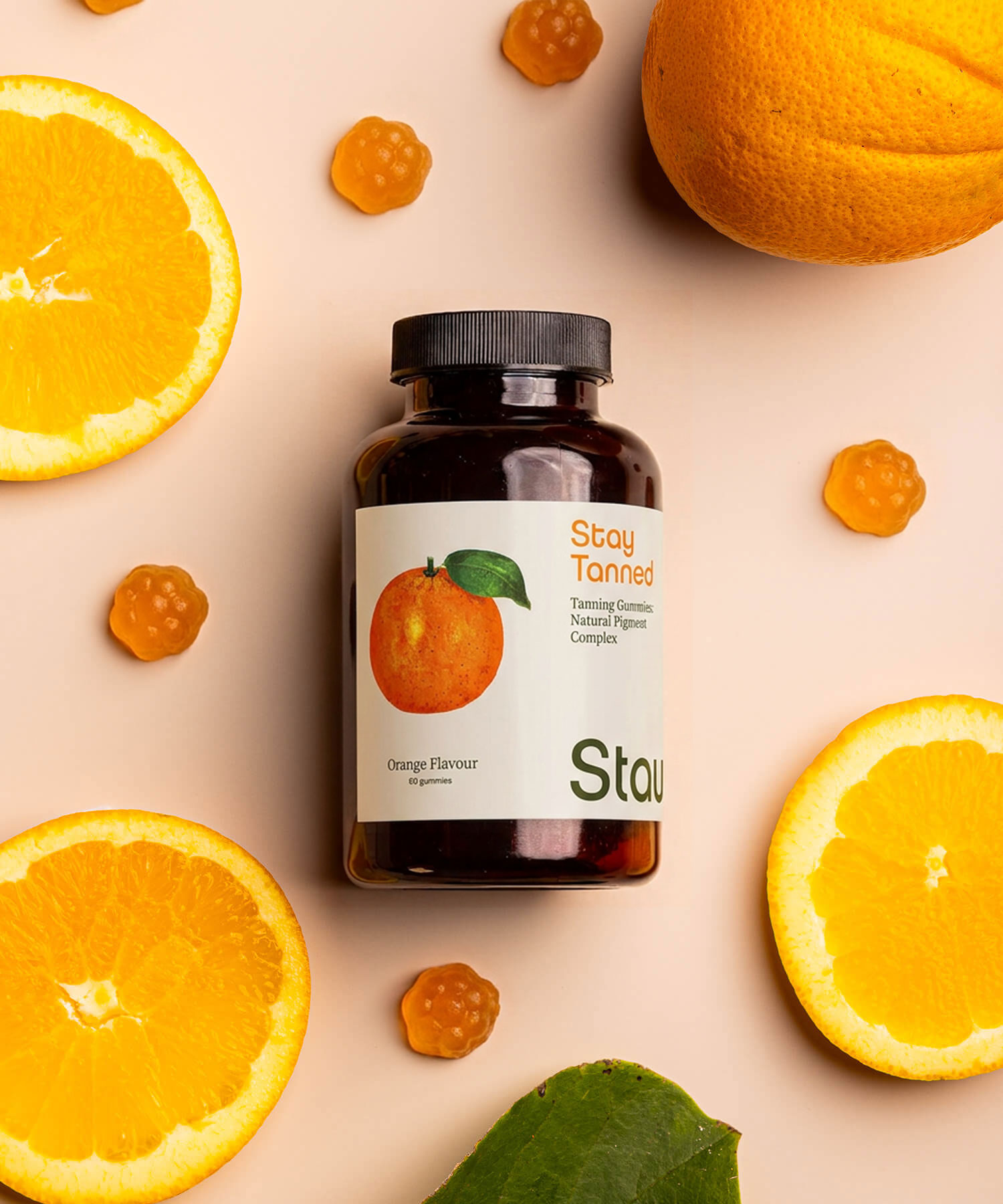
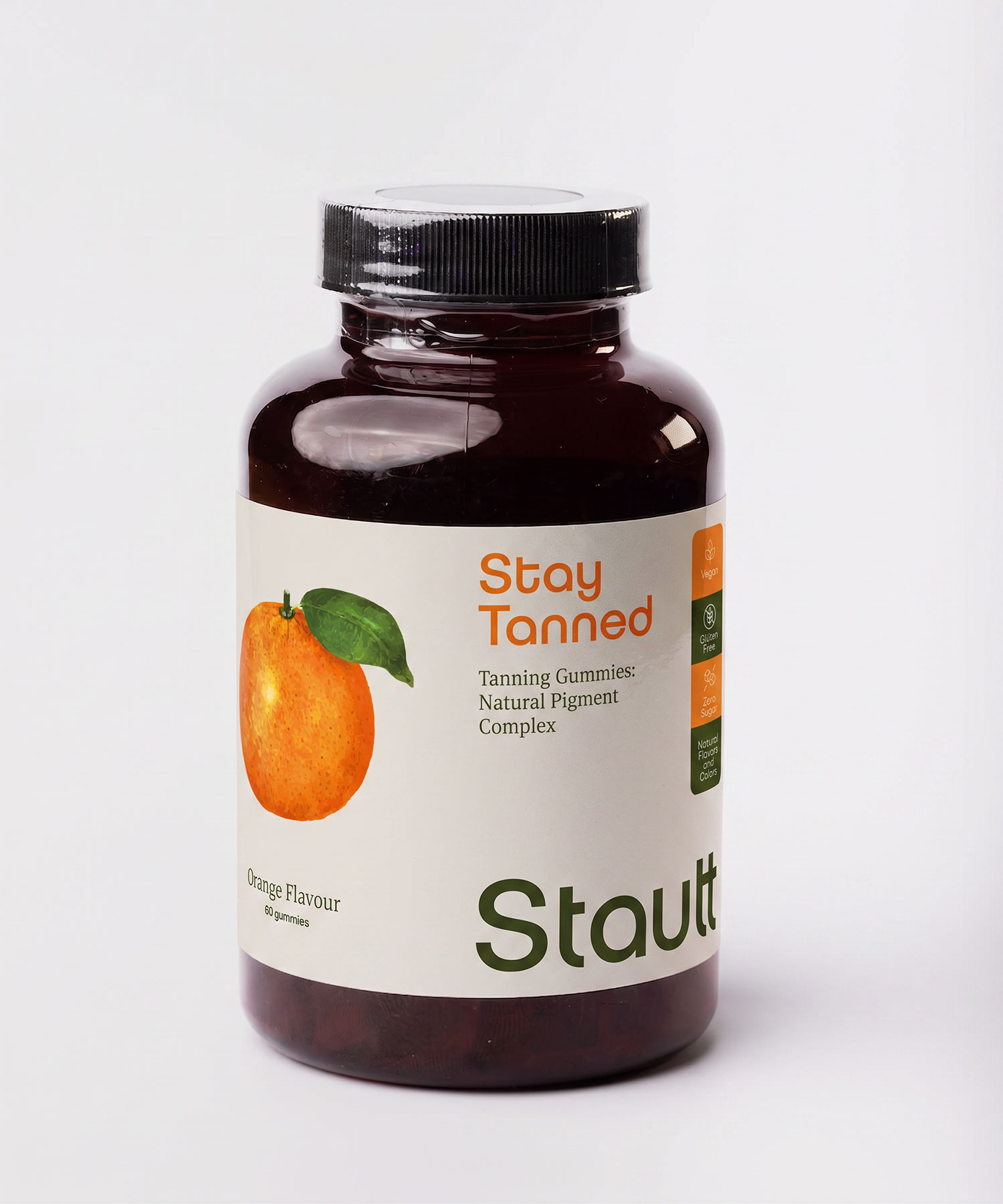
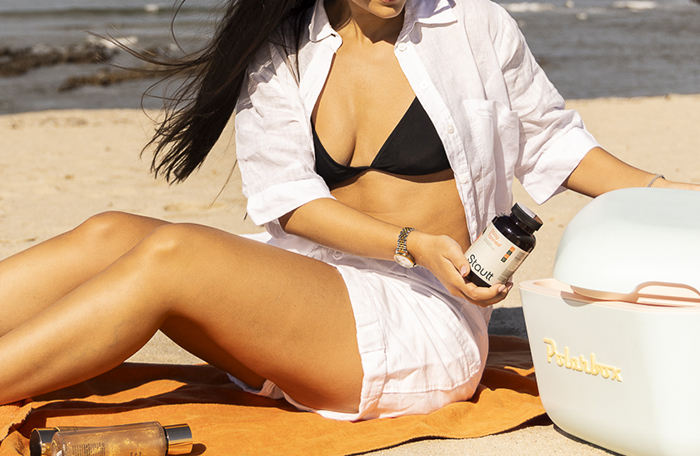
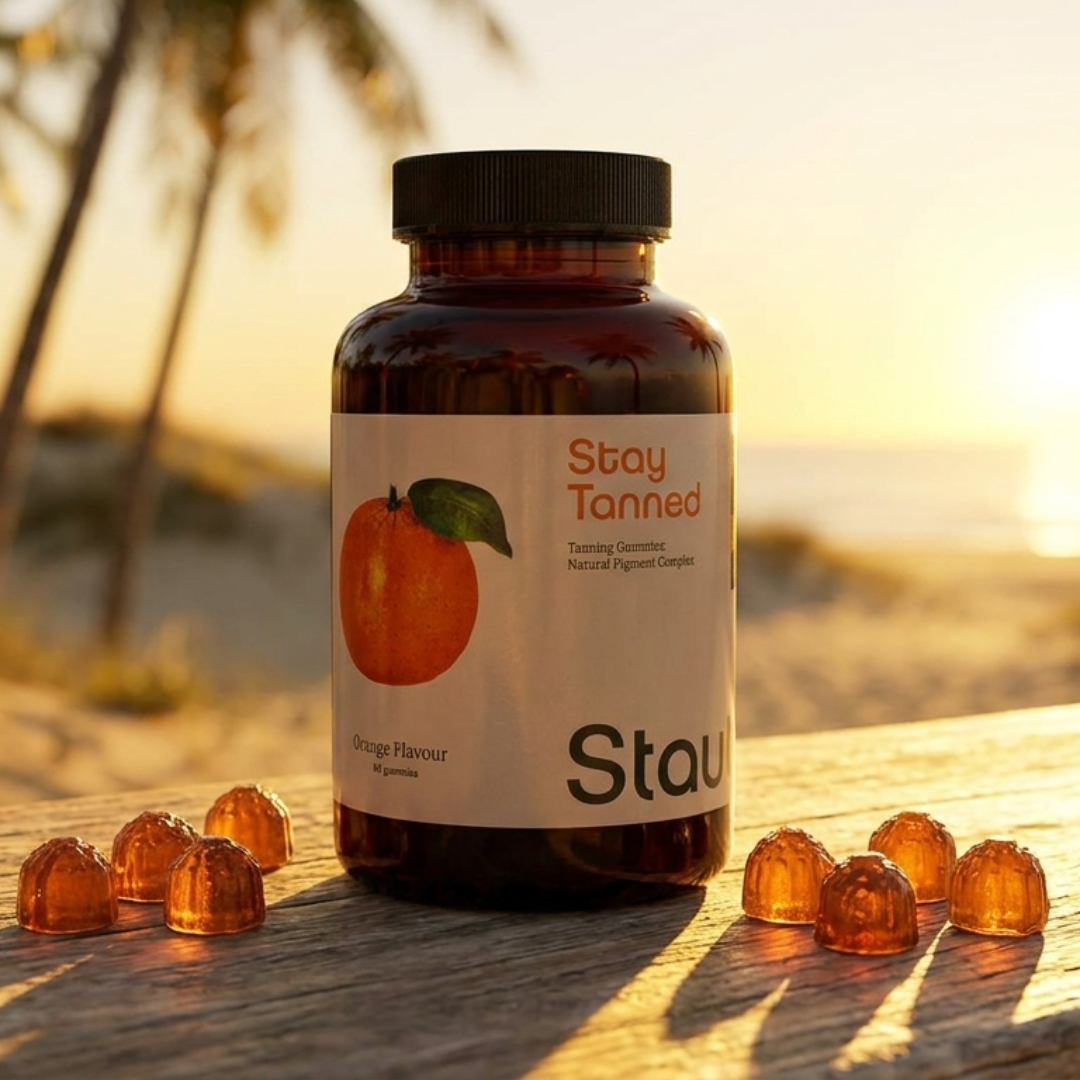
Food is the foundation, but everyday life rarely matches the ideal plate. Three carrots, a bowl of spinach, a mango and a pepper, every day for three weeks, with a side of healthy fats? Few people manage that consistently. A well-formulated tanning supplement concentrates the same active compounds (beta-carotene, often combined with lycopene, vitamins C and E, selenium and other antioxidants) into a daily dose that is easy to stick with. The Stautt Stay Tanned gummies, for example, deliver this profile in two orange-flavored gummies per day, with plant-based pigments and no added sugars or artificial colors. The point of a supplement is not to replace food, but to make sure you reach the threshold of intake that produces a visible effect, without having to plan three carrot-heavy meals a day.
How to use beta-carotene safely
Beta-carotene from food and standard supplements is considered very safe. Unlike pre-formed vitamin A, it does not build up to toxic levels because the body only converts what it needs. The most common, harmless side effect of very high intake is a slight orange-yellow tone in the palms or soles, which disappears when intake reduces. Two practical notes. First, smokers and former smokers should keep beta-carotene supplementation moderate and follow medical advice, because high doses in this group have been linked to a higher lung cancer risk in older clinical trials. Second, beta-carotene is not a sunscreen: it offers a small amount of internal antioxidant support, but it does not replace SPF protection, sunglasses or shade during peak hours.
Building a simple beta-carotene routine
If you want to put this into practice without overthinking, three steps cover most of the value. Eat one beta-carotene-rich food every day (a serving of roasted sweet potato, a carrot salad, a mango at breakfast), always paired with a source of fat. Add a daily tanning supplement starting three to four weeks before your first beach trip, and continue it through the summer. Stay consistent with hydration, SPF and gentle skin care, because beta-carotene only works on skin that is healthy enough to hold the color. Three small habits, repeated over weeks, produce a visible, even, healthy-looking tan: the kind that does not need a filter.