How to Tan Faster (and Make Your Tan Last Longer)
Summer brings the same question every year: how can you tan faster, more evenly, and keep that golden glow once you have it? The truth is that there is no magic trick, but there is a smart sequence. The body needs preparation, the right amount of sun, the right food, and a bit of after-care. Get those four pieces right and your tan deepens faster, looks more uniform, and stays on your skin for weeks instead of days. Here is what actually works, with no shortcuts that damage your skin.
1. Prep your skin a few weeks before sun season
The biggest mistake people make is starting their tan from a dry, dull, neglected canvas. Exfoliating gently once or twice a week in the weeks leading up to summer removes dead cells that block even pigmentation and lift off prematurely with the first scrub in the shower. Pair that with daily moisturizing, ideally with a body cream that contains shea butter, glycerin, or hyaluronic acid. Well-hydrated skin holds color much longer than dehydrated skin, because melanin sits inside healthy cells that take longer to shed. Two to four weeks of this simple routine make a visible difference before you even see the sun.
2. Eat for a deeper, more even tan
Tanning starts in the kitchen long before it starts on the beach. Foods rich in beta-carotene, the natural pigment that gives carrots their orange color, are converted into vitamin A and accumulate in the skin, supporting melanin production and adding a warm undertone. Load your plate with carrots, sweet potato, butternut squash, mango, papaya, apricots, red pepper, and dark leafy greens such as spinach and kale. Tomatoes deserve a special mention: their lycopene content has been shown to help the skin handle UV exposure better. Add healthy fats (olive oil, avocado, nuts) at the same meal, because beta-carotene and lycopene are fat-soluble and only absorb properly when fat is present. Start two or three weeks before your first real sun exposure for the most visible effect.
3. Sunbathe smarter, not longer
Spending six hours roasting at noon does not give you a better tan. It gives you a burn, peeling, and a tan that lifts off in a week along with the damaged skin. The skin produces melanin in response to UV exposure, but only up to a daily ceiling. Beyond that, you are just burning. The smart approach is gradual exposure: start with 15 to 20 minutes per session in the first few days, ideally before 11 a.m. or after 4 p.m. when the sun is less aggressive, and build up slowly. Change position regularly to expose every part of the body evenly, and avoid falling asleep flat on the same side for an hour. Even tanning is a question of geometry as much as time.
4. Sunscreen is not the enemy of your tan
One of the most stubborn myths in tanning is that sunscreen blocks the tan. It does not. A good SPF blocks UVB rays that cause burns and slows down (but does not stop) the melanin response. What it does protect you from is the kind of damage that forces your skin to shed early, taking your color with it. Use a broad-spectrum SPF 30 or higher, reapply every two hours and after every swim, and pay attention to areas people forget: ears, top of the feet, the back of the knees, the chest. A tan that develops under proper protection looks more even, deepens more slowly, and lasts noticeably longer. It is also the only kind of tan that does not age your skin prematurely.
5. After-sun care decides how long the color stays
What you do in the hour after sun exposure matters as much as the exposure itself. Take a lukewarm shower (hot water dries the skin and lifts the tan), pat dry instead of rubbing, and apply a generous layer of after-sun lotion or pure aloe vera while the skin is still slightly damp. Hydration locks pigment into the skin and prevents the peeling that erases days of work. Drink water throughout the day, eat protein at every meal to support skin renewal, and avoid harsh scrubs or chemical exfoliants for at least 48 hours. If your tan is fading unevenly after a couple of weeks, gentle exfoliation once a week followed by deep moisturizing keeps the transition smooth instead of patchy.
6. Where a tanning supplement fits in
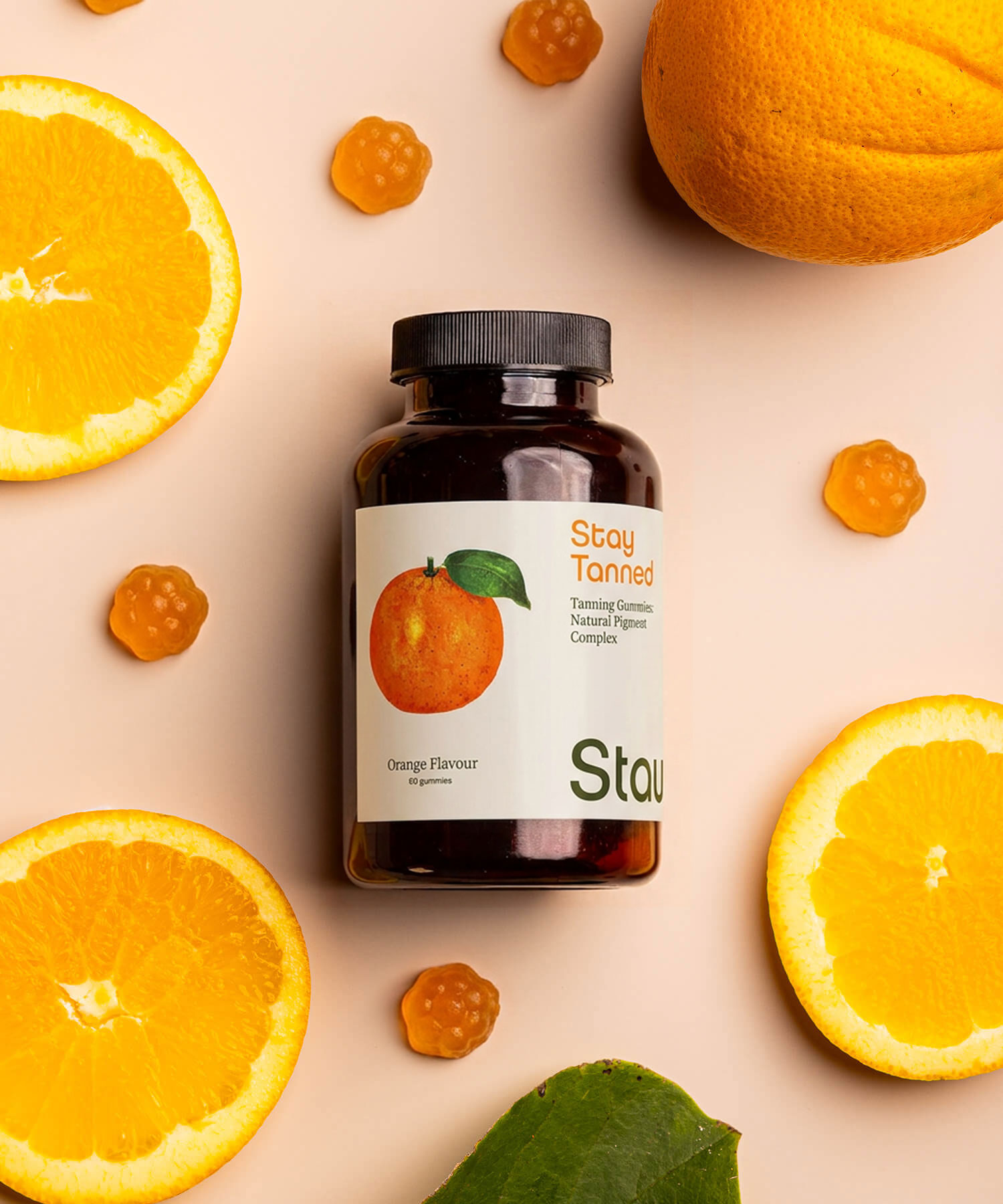
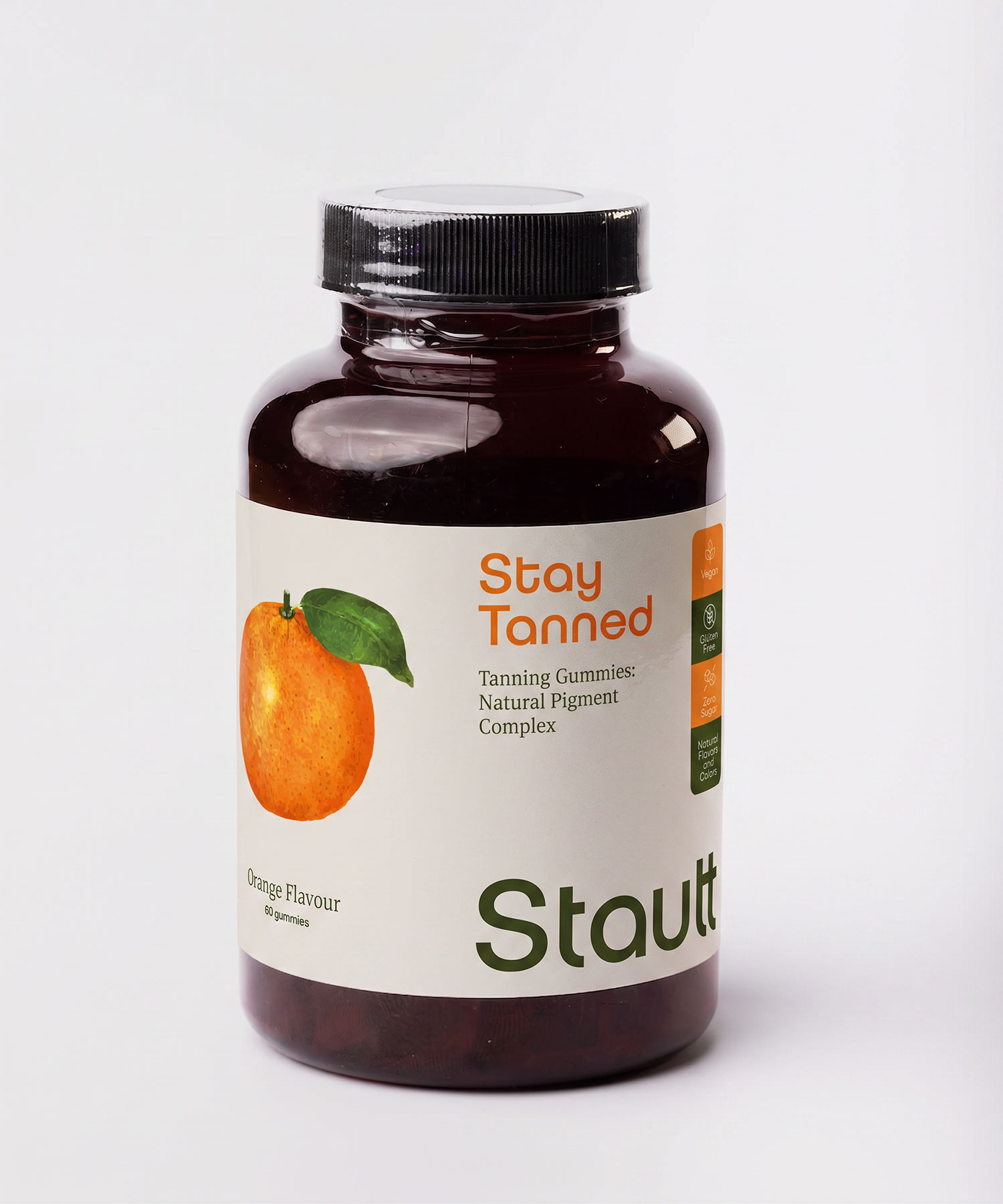
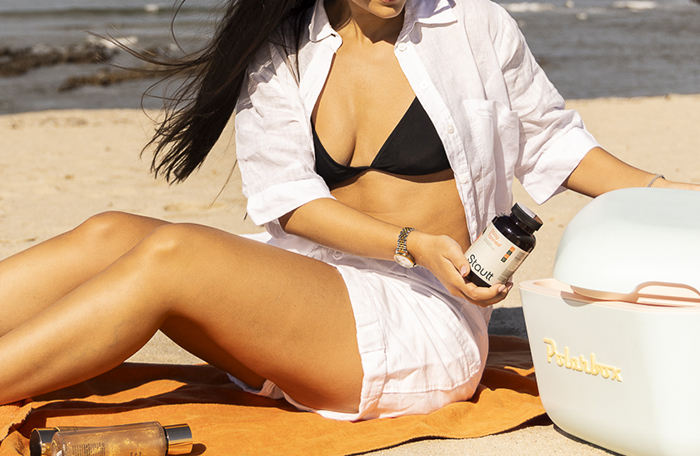
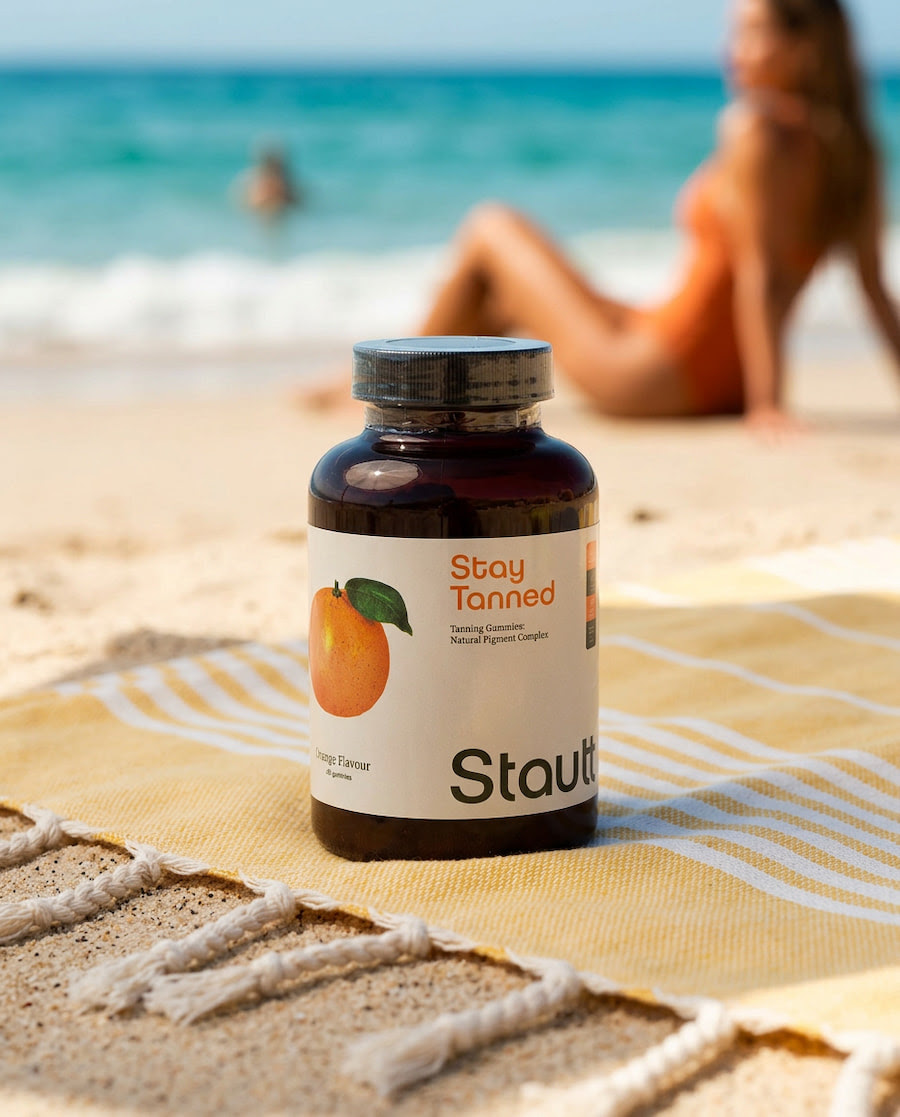
Food is the foundation, but in the real world it can be hard to eat the equivalent of three carrots and a bowl of spinach every day for three weeks. A tanning supplement like Stautt Stay Tanned helps fill the gap: it concentrates the vitamins, minerals, and plant-based pigments that support a healthy, even tan into two simple gummies per day. Used as part of the bigger picture (prep, food, smart exposure, after-care), it speeds up how quickly the skin reaches a nice tone and helps maintain the color once you are back from the beach. It is not a replacement for sunscreen or sleep, but a small extra that compounds over a 30 to 90-day routine.
Build a routine, not a sprint
The people who come back from August looking effortlessly bronzed are almost never the ones who spent every Saturday baking under the sun. They are the ones who prepared their skin in May, ate for the tan they wanted, took short and frequent doses of sun, and stayed religious about hydration. Tan is a slow craft. Treat it that way and you get a deeper color, a healthier skin, and a glow that lasts well into autumn instead of disappearing with the first cold week of September.