Tanning Gummies: Do They Actually Work? Honest Look at Effectiveness, Risks and Results
“Do tanning gummies actually work?” is probably the most common question typed into Google before anyone buys one. Some people have heard friends rave about them. Others suspect the whole thing is sugar with flavor. The honest answer sits in the middle: well-formulated tanning supplements do something real, but they are not magic, and they only deliver if you understand what they can and cannot do. This is the no-marketing version of how these products work, who they help, who should be careful, and how to judge results.
What tanning gummies actually do
A good tanning supplement is built around a small group of well-studied compounds. Beta-carotene, the orange pigment in carrots and sweet potatoes, accumulates in the fatty layer under the skin and adds a warm undertone. Lycopene, found in tomatoes, helps the skin handle UV exposure with less oxidative damage. Vitamins C and E neutralize free radicals generated by the sun. Minerals such as selenium and copper support the enzymes involved in melanin production. Taken together, this combination prepares the skin, accelerates the rate at which it reaches a uniform color, and helps that color stay on for longer.
What gummies are not is a melanin injection. They do not bypass the natural process of tanning. They make the system that already exists in your skin work better, more evenly, and with less collateral damage. That is the realistic frame.
What they cannot do
Three things gummies cannot do, no matter how good the formula. They do not give you a tan without sun exposure: beta-carotene alone produces a subtle warm tone, not the bronze you see in summer photos. They do not protect you from UV radiation in a meaningful way: the antioxidant support inside the body is small compared to a broad-spectrum SPF on the surface, and no supplement replaces sunscreen. And they do not produce results overnight. Carotenoid accumulation needs four to six weeks of consistent intake to show measurable effects on skin tone, with peak visibility around three months. Anyone selling instant results from a gummy is selling you the flavor, not the function.
How long until you actually notice a difference
The honest timeline looks like this. Weeks one and two are invisible: the active compounds are starting to build up but you will see nothing in the mirror. Weeks three to four bring a subtle warm undertone, more visible in natural light than under bathroom mirrors. Weeks six to eight, paired with normal sun exposure, are where most users notice their tan develops faster, looks more even, and fades more slowly. Three months in, the cumulative effect is at its strongest. This is why brands that sell 30, 60 and 90-day packs are not just upselling: the science genuinely rewards consistency.
Who should be careful (or avoid them)
Beta-carotene from food and standard supplements is broadly safe, but there are real groups that should slow down. Smokers and former smokers have shown an elevated lung cancer risk in older clinical trials when taking high doses of beta-carotene, and should discuss any supplementation with a doctor before starting. Pregnant and breastfeeding women should also consult a healthcare professional, mostly because some tanning blends include vitamin A derivatives in addition to beta-carotene. People on anticoagulants should mention any new supplement to their physician, since vitamin E in particular can interact with blood thinners. Anyone with a known carotenoid allergy or active inflammatory skin condition should avoid these products until cleared by a dermatologist. And the cosmetic side effect everyone whispers about, a slightly orange tint on palms or soles after very high intake, is harmless and reverses when you reduce the dose.
What separates a serious gummy from candy
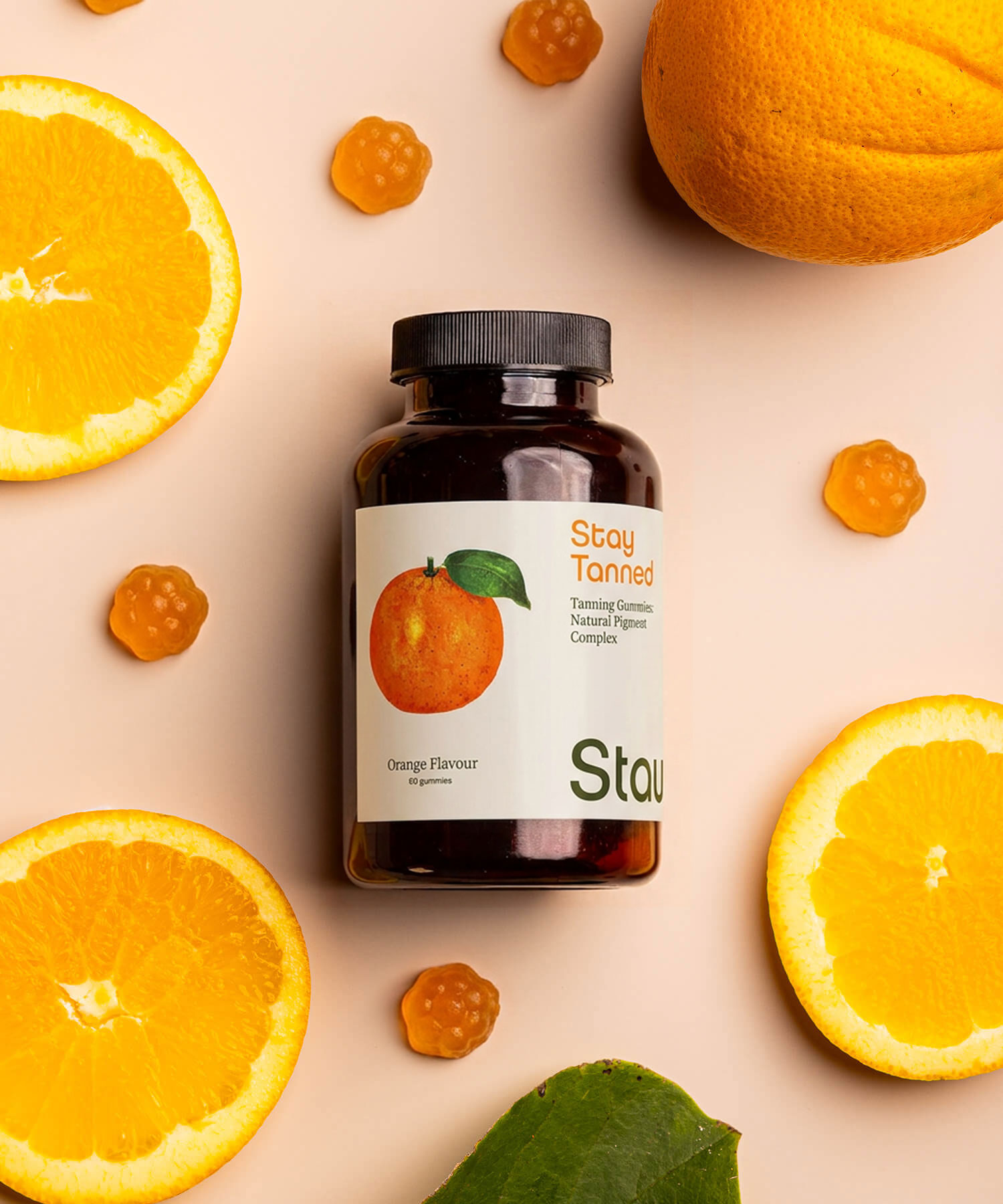
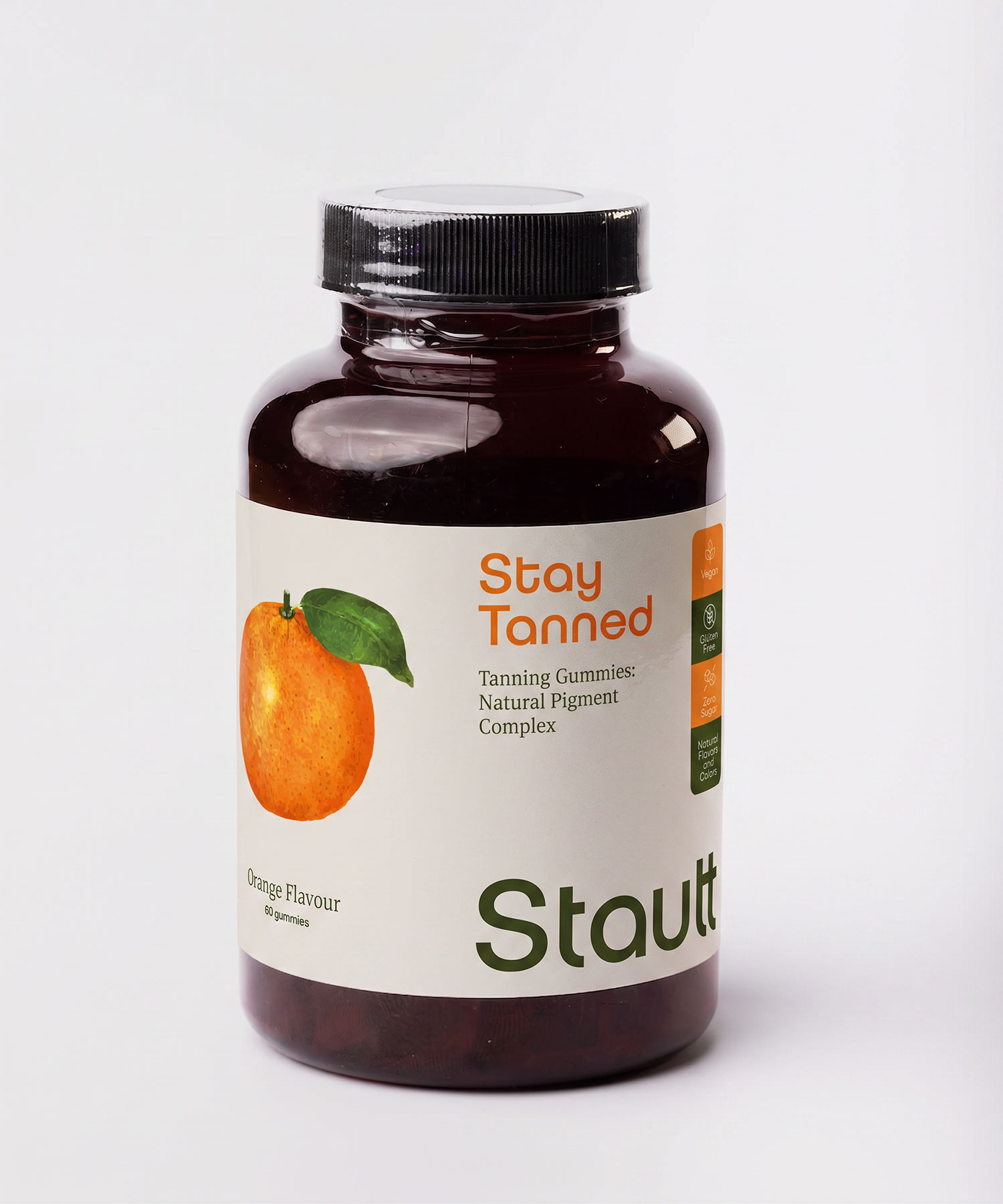
Not all tanning gummies are built equally. When evaluating a product, look for four things. First, a meaningful dose of beta-carotene, ideally combined with at least one other antioxidant such as lycopene, vitamin E or selenium. Second, plant-based pigments rather than artificial colorings, which signals a brand that takes the formulation seriously. Third, no added sugars and no artificial flavors, because a sugar bomb defeats half the point. Fourth, a clear daily dose and a recommended duration: a brand that tells you to take two gummies a day for 30, 60 or 90 days is being honest about how the science works. The Stautt Stay Tanned gummies, for example, follow this exact logic: two orange-flavored gummies per day, vegan, gluten-free, no added sugars, no artificial colors, designed for a 30 to 90-day treatment.
How to judge results honestly
Most disappointments with tanning gummies come from unrealistic expectations. To evaluate fairly, take a baseline photo of your skin in natural light before starting, then again at week four and week eight, in similar lighting. Track changes in evenness and warmth, not just darkness. Pay attention to how quickly your tan develops on the first beach trip versus previous summers, and how long the color stays after exposure ends. If you started consistent intake three to four weeks before your first sun day, ate a couple of beta-carotene-rich meals per week, and stayed religious about hydration and SPF, the difference should be visible by mid-summer. If you skipped half the doses and avoided the sun, no gummy will save the experiment.
So, do they work? The fair verdict
Yes, properly formulated tanning gummies work, with three caveats: they work gradually, they work alongside good habits, and they work for a healthier and more even tan rather than a darker one. They are a sensible addition for anyone who wants to prep their skin for summer, support a more uniform color, and stretch the tan into autumn. They are a poor choice for anyone looking for an overnight bronze or a substitute for sunscreen. Treat them like a 60-day routine rather than a single-week miracle and you will get the kind of results that quietly impress people in September, without the marketing hype.