Self-Tanner vs Tanning Gummies: Which Should You Choose (and When to Combine Them)
Standing in the beauty aisle staring at self-tanners on one shelf and tanning gummies on another, the question feels simple: which one actually works better? The answer is that they are not really the same product trying to solve the same problem. Self-tanners and tanning supplements work on completely different mechanisms, deliver different kinds of results, and often work best together rather than against each other. Here is a clear comparison, with no brand bias, so you can pick the right tool (or build the right combination) for the look you actually want.
How each one works
A self-tanner is a cosmetic that colors the surface of the skin. The active ingredient is almost always DHA (dihydroxyacetone), a sugar derived from sugar beet or sugar cane. When DHA contacts the keratin in the outermost layer of skin, it triggers a reaction (the same browning effect you see when a sliced apple turns brown) and produces a temporary bronze tone. No sun involved, no melanin involved. The color is essentially a stain on the outer skin cells.
A tanning supplement works from the inside. Active compounds such as beta-carotene, lycopene, vitamin E, vitamin C and selenium accumulate in the body over weeks, supporting melanin production, neutralizing free radicals, and depositing a natural warm undertone in the layer of fat just under the skin. The color you see is partly your own melanin, partly the pigments stored in subcutaneous tissue. It is the same biology that turns your skin warmer in summer, only better fed and better protected.
Time to see results
This is where the two diverge most clearly. Self-tanners give you a visible tan within three to eight hours. Application today, color tonight. Tanning gummies, in contrast, ask for patience. The active compounds need four to six weeks of consistent intake to show a measurable change in skin tone, with peak effect at twelve weeks. If you have a wedding on Saturday and pale skin on Monday, only a self-tanner will save you. If you want to walk into summer with naturally golden skin and keep it through August, a supplement started in April is the smarter play.
How long the color lasts
Self-tanners are temporary. The color sits on cells that the skin sheds naturally, so a typical application lasts three to seven days before it starts to look uneven and needs a fresh coat. Tanning gummies build a cumulative effect that fades only when you stop taking them and your body cycles out the stored pigments, which takes several weeks. A self-tanner is a sprint repeated every few days. A gummy is a slow build that compounds, then a slow fade.
How natural it looks
Modern self-tanners have improved enormously, but they can still betray themselves in three ways: a slight orange undertone if applied unevenly, dark patches on knees, elbows and ankles where skin is thicker, and the unmistakable smell that lingers despite “fragrance-free” claims. A tan from the inside, supported by supplements and gradual sun exposure, looks like, well, a real tan. Even, warm, slow-developing, no streaks, no smell. The trade-off is that you only get there if you start early and stay consistent.
Safety and UV protection
Neither option protects you from UV radiation. A self-tanner colors the surface but offers no SPF unless it is explicitly combined with sunscreen in the same product. A supplement gives a small amount of internal antioxidant support, but the level is far below what a topical SPF delivers. The conclusion is simple: regardless of which path you choose, broad-spectrum sunscreen on exposed skin is non-negotiable. On personal safety, DHA is considered safe for topical use but should not be inhaled, so spray tans require proper protection of eyes, lips and mucous membranes. Beta-carotene from food and standard supplements is safe, with caveats already discussed (smokers, anticoagulants, pregnancy: consult a doctor).
Cost and convenience
Self-tanners are cheap per application but you keep buying them. A bottle runs out and the color fades within a week. Tanning gummies cost more upfront for a 30 or 90-day pack, but the effect lasts beyond the box if you keep up the routine, and once your skin reaches the desired undertone, maintenance becomes simpler. Time-wise, applying self-tanner properly takes 20 to 30 minutes of careful work to avoid streaks. Taking two gummies takes ten seconds. The math depends on how often you reach for each.
When to choose self-tanner
A self-tanner is the right tool for short-notice events: a wedding, a beach trip in a week, a photoshoot, the first warm Friday of spring when winter skin needs help fast. It is also useful in winter, when there is no sun to work with at all. Choose a mousse or lotion with a guide color so you can see where you have applied, and exfoliate the day before to ensure the surface is smooth. A good self-tanner gives you three to five days of bronze look at almost any time of year.
When to choose tanning gummies
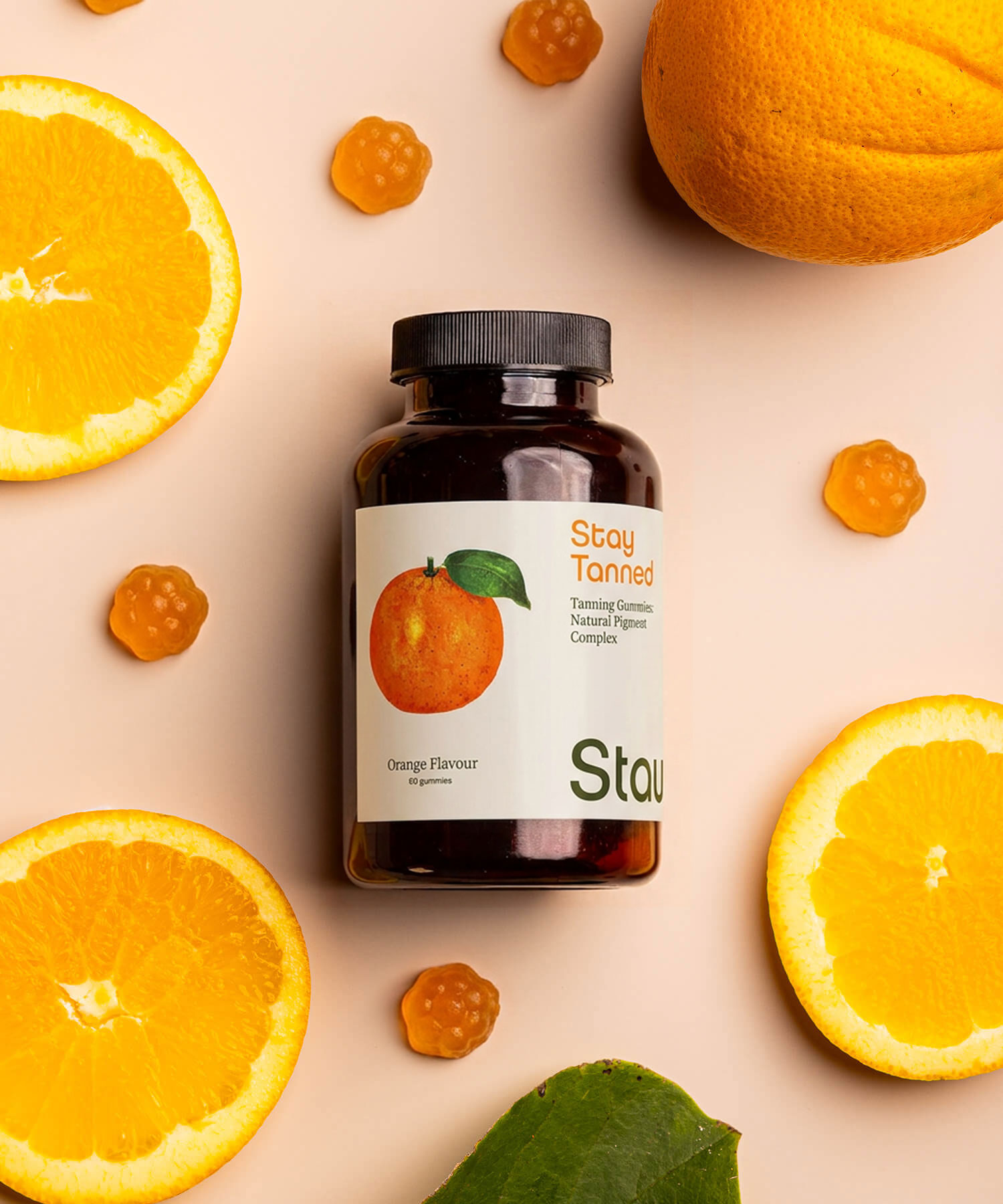
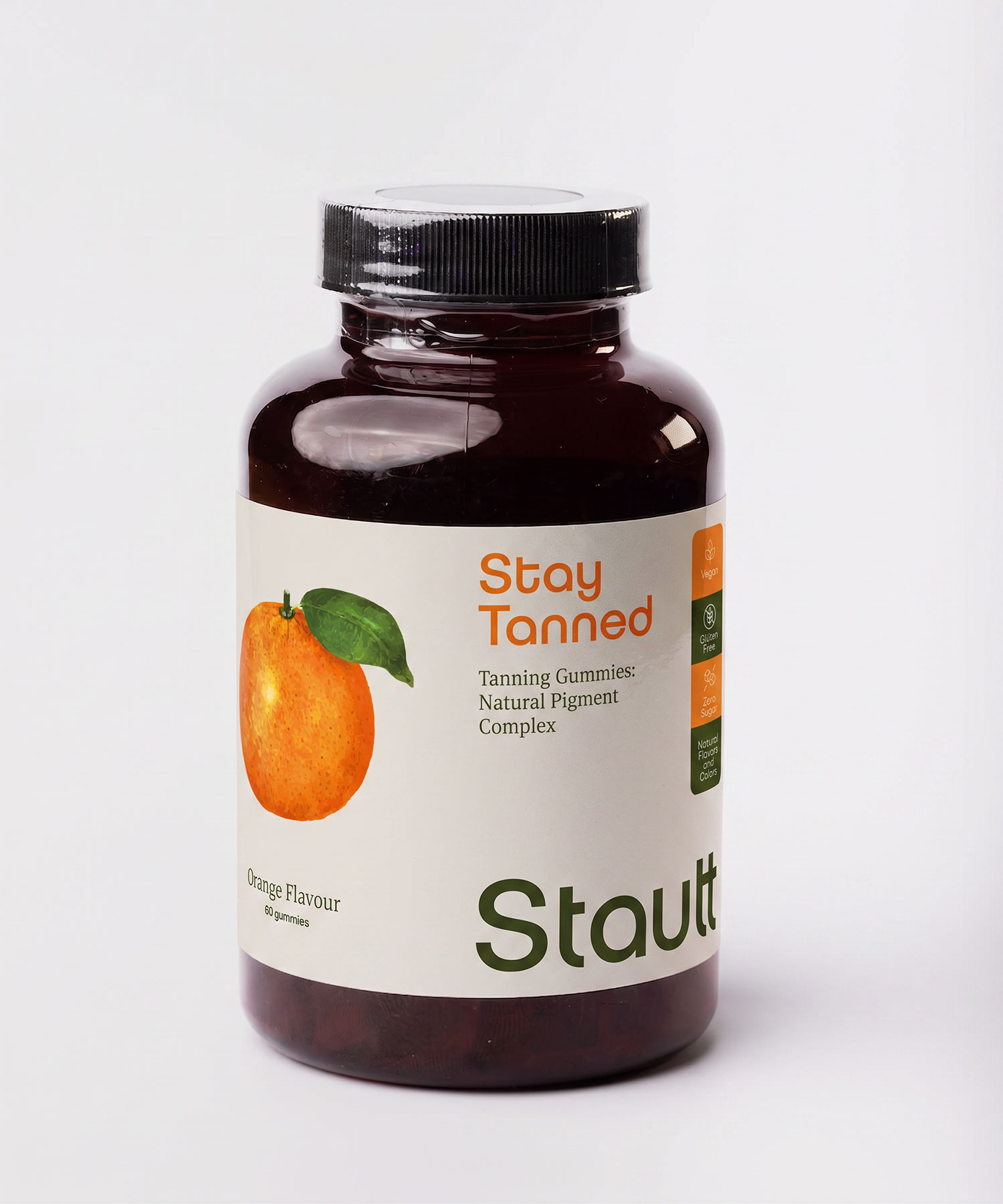
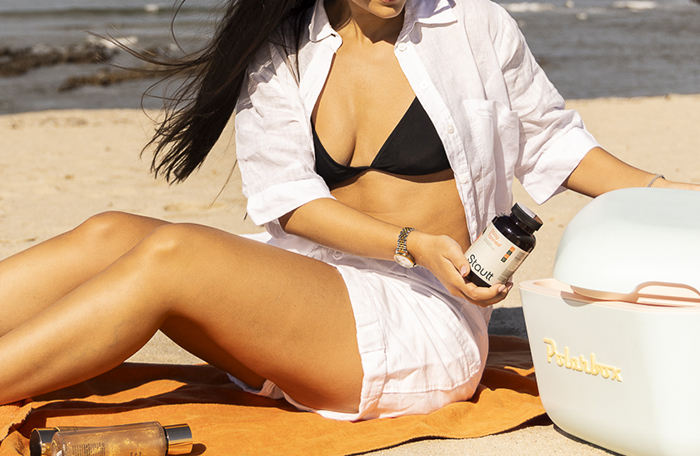
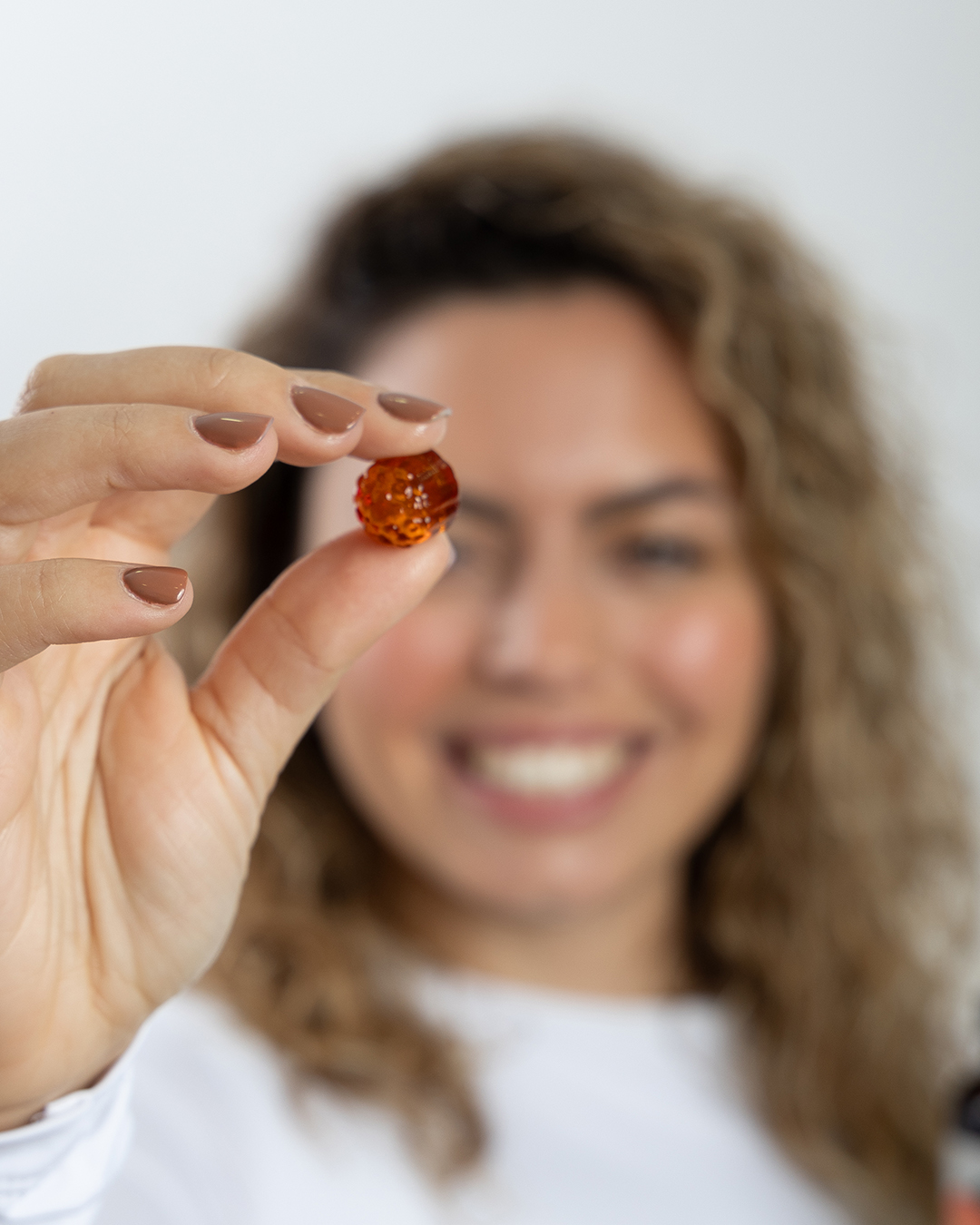
A supplement is the right tool when you are planning ahead: starting in spring for a more even summer tan, or wanting to extend your color into October. Choose a product with real beta-carotene, ideally combined with antioxidants such as lycopene, vitamins C and E, with no added sugars or artificial colors. The Stautt Stay Tanned gummies, for example, deliver this kind of profile in two orange-flavored gummies a day across a 30 to 90-day routine. The trade-off is patience, but the result is a natural-looking tan that does not wash off in the shower.
The honest answer: combine them
For most people, the smartest strategy is not picking one but using both at the right moment. Start a tanning supplement three to four weeks before your first beach trip so your skin is primed when summer arrives. Layer a self-tanner for specific events when you want a deeper color tonight (a wedding, a holiday departure, an event). Once your natural undertone is built up, you will need self-tanner far less often, and when you do use it, it will look more believable because it sits on top of an already-warm base. The two tools are not rivals. They are different speeds of the same outcome, and the people who get the best results almost always know how to use both.